
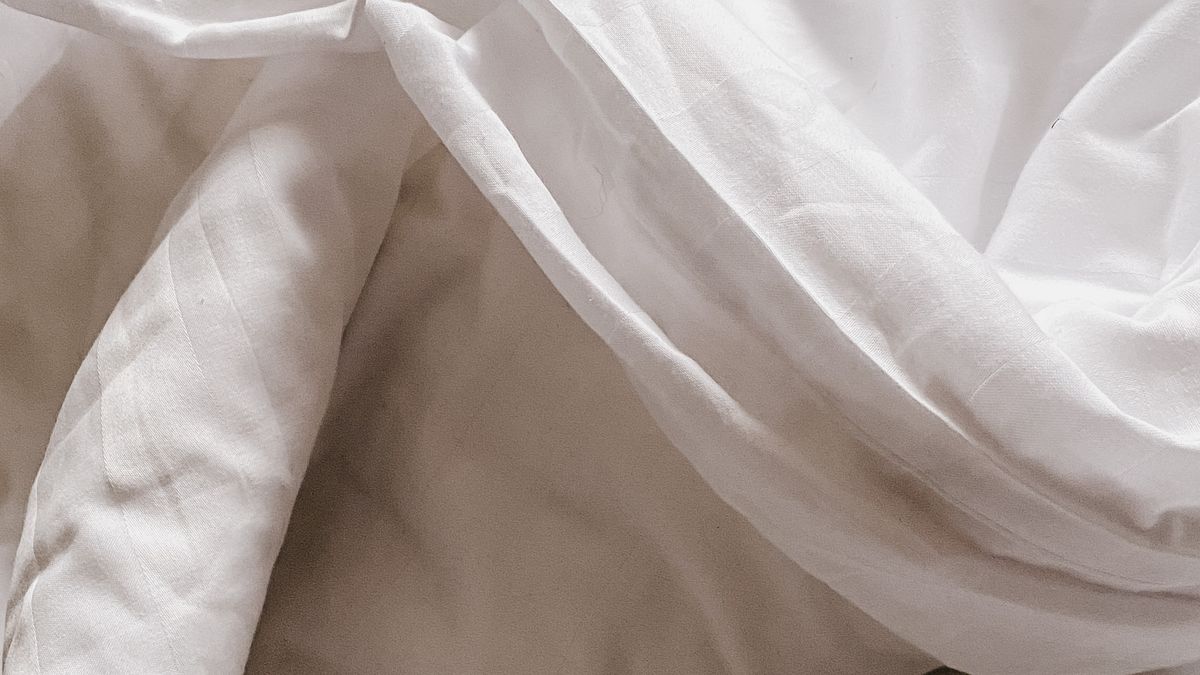
Two linen cushions can share the same fibre, the same weight and the same natural dye, yet feel completely different in the hand. The difference is the weave — the way the warp threads (running lengthways) and the weft threads (running across) cross one another. That simple pattern of over and under decides how a fabric drapes, how it wears, how it catches the light and how it will look after five years of use. When you are choosing curtains, bedding or throws, weave is often a far more useful guide than thread count.
Plain weave is the simplest structure: one warp thread over one weft thread, then under, then over again. It is sometimes called tabby, and it is the weave behind most classic linen bedding, table linens and lightweight curtains.
Because the threads interlace so frequently, plain weave is inherently stable. It resists distortion, holds a crisp edge and takes repeated washing well, which is why it suits sheets and pillowcases so neatly. The trade-off is drape: plain weave hangs with more body and a little less fluidity. In a heavy linen it can feel almost papery at first, softening beautifully over months of use.
For bedding, look for a plain weave where the slubs — those characteristic thick-and-thin places in the yarn — sit proud on the surface. They give linen its texture and allow air to move through the cloth, keeping the fabric breathable in summer and warm in winter.
Twill steps the weft across by two or more threads at a time, creating the diagonal lines you see on denim and gabardine. In linen, that longer float — the length of yarn passing over several threads before dipping under — makes all the difference.
Floats give twill a softer, more pliable hand from the first wash. It drapes. A twill throw falls in folds rather than angles, and a twill curtain hangs with a fuller, calmer line without needing as much weight in the hem. Twill is also denser and more abrasion-resistant than plain weave, which makes it a sensible choice for cushions that get leaned on and sofas that get lived on.
Herringbone is a twill that reverses direction at regular intervals, producing the broken V pattern that gives it its name. It is one of the most useful weaves in natural interiors because it adds visual interest without any printing, embroidery or synthetic finish.
Structurally, herringbone sits between plain and twill. It is generally a little heavier per square metre, holds its shape well and is fully reversible, so a herringbone throw looks finished from both sides — handy when it is folded over the arm of a chair. The chevron pattern breaks up the surface of the fabric, which means it hides everyday marks and creases more gracefully than a flat plain weave.
Think about how the textile will be used before you think about colour.
Weight matters alongside weave. A loosely woven plain linen under about 150 grams per square metre will feel light and semi-sheer; a tightly woven twill at 250 grams or more will feel substantial and drape with gravity. If you are ordering samples, hang each one over a chair back for a day and watch how it falls.
All three weaves are machine washable at low temperatures, but the details differ. Plain weave, with its frequent interlacing, tolerates hotter washes and firmer tumbling better. Twill and herringbone benefit from a gentle cycle, a low spin and line drying in the shade, which keeps those longer floats from distorting. Wash linen with a mild detergent, skip fabric softener — it coats the fibre and reduces absorbency — and give the piece a good shake before hanging. A well-woven piece of linen, looked after simply, will outlast almost anything synthetic in the same room, which is the quietest kind of sustainability there is.

Hi, my name is Anthony kuber. I am artist and fashion designer.
I love to travel and writing blogging.
Your email address will not be published. Required fields are marked *
Software Developer & Writer
Hey, I'm Diva, a developer and writer blending code and creativity. I'm driven by a deep curiosity and a relentless pursuit of excellence. Join me as I craft digital solutions and captivating stories.


