
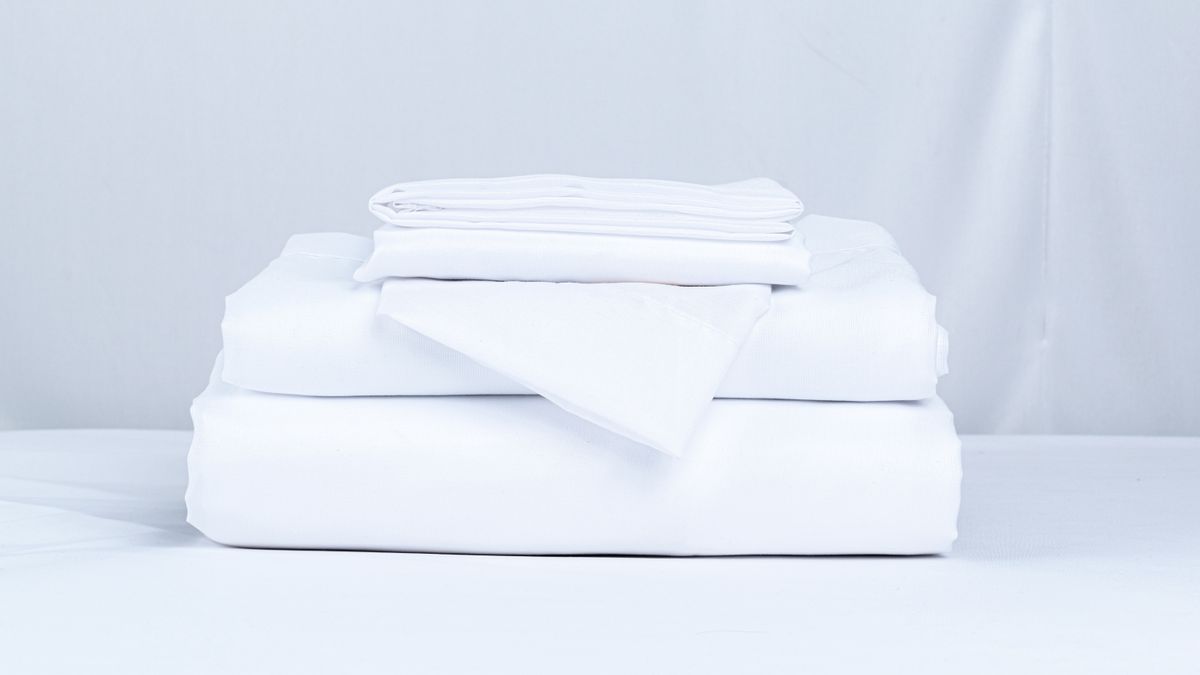
British summers are nothing if not unpredictable. You can have a fortnight of drizzle followed by a still, sticky week where the bedroom never drops below 20°C. That variability is exactly why linen bedding has such a loyal following here. Linen fibres are hollow, which makes them naturally breathable, and they can absorb up to a fifth of their own weight in moisture before feeling damp. That means when you get warm in the night, linen wicks the moisture away from your skin and releases it into the air, rather than trapping it against you the way some synthetic blends do.
Linen also has high thermal conductivity, so it feels cool to the touch the moment you slide between the sheets. In a warm, humid British bedroom, that coolness is often the difference between drifting off and lying there wide awake.
But not all linen bedding behaves the same way. The weight of the fabric, the weave, and how you layer it will all shape how cool you actually sleep.
Linen bedding is usually described by its weight in grams per square metre (GSM). Thread count, so often quoted for cotton, is largely meaningless for linen, so ignore it and look at the GSM instead.
If you sleep hot, or your bedroom faces south and holds the day's heat, lean light. If your bedroom is north-facing and never quite warms up, a midweight set will serve you better through the summer months.
Two duvet covers at the same GSM can feel completely different depending on how they are woven. A plain weave is the most open and breathable, letting air move freely through the fabric. Twill and herringbone weaves are denser and slightly warmer, which is why they tend to appear in winter ranges.
Look, too, at how the linen has been finished. Stonewashed or garment-washed linen has been tumbled to soften the fibres, giving it a relaxed drape and a matte, lived-in look. It feels lovely against the skin straight away. Crisper, less-washed linen feels cooler and more hotel-like, and it will soften gradually over a year or two of washing. Neither is better; it is simply a question of the feel you prefer on a warm night.
One more detail worth checking: whether the bedding is washed or unwashed. Unwashed linen can shrink by several per cent on its first wash, so buy a size up or expect a snugger fit after the first launder.
British homes vary enormously, and your bedroom's particular quirks should guide your choices.
Layering is the real skill of summer bedding, because a British night can start at 22°C and end at 13°C. Think in three parts.
Start with a fitted linen sheet in a light weight. Add a flat linen sheet on top, which you can pull over you on mild nights when a duvet would be too much. Then finish with either a 4.5 tog duvet in a lightweight linen cover, or, on the hottest nights, a folded linen throw or blanket at the foot of the bed that you can reach for at 3am.
Linen is excellent at this because it layers without bulk. Two light linen layers trap a little air between them, which insulates gently without the clammy heaviness of a thick cotton duvet. As the summer shifts into September, you simply add a midweight layer rather than replacing everything.
Linen improves with washing, but a few habits keep it at its best.
Choose the right weight, respect the weave, and layer with a little flexibility, and your linen will earn its keep from the first warm night of May right through to the last muggy evening in September.

Hi, my name is Anthony kuber. I am artist and fashion designer.
I love to travel and writing blogging.
Your email address will not be published. Required fields are marked *
Software Developer & Writer
Hey, I'm Diva, a developer and writer blending code and creativity. I'm driven by a deep curiosity and a relentless pursuit of excellence. Join me as I craft digital solutions and captivating stories.


