
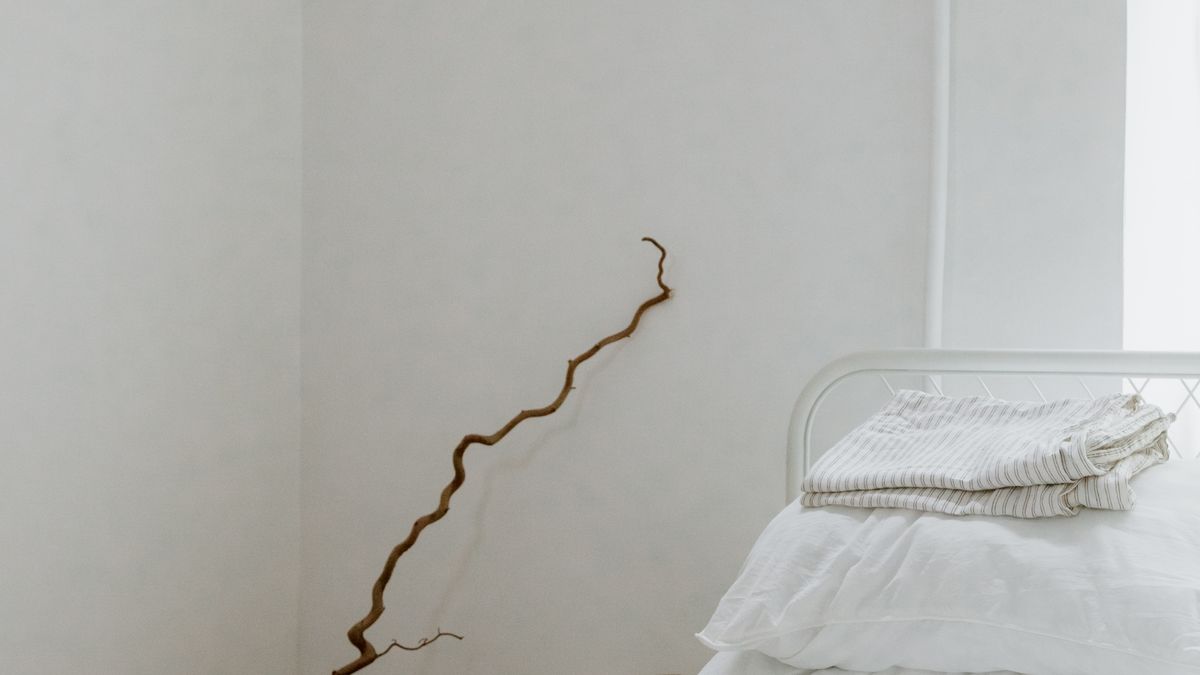
Linen is woven from flax, one of the oldest textile fibres in cultivation, and its natural properties are exactly why it lasts for decades. Those same properties are also why it can feel surprisingly stiff when it first comes out of the packaging. Flax fibres are long, strong and slightly rigid, and during weaving and finishing the yarn is given a light size or starch to keep the weave even and protect the cloth in transit. Combine that with the tension of freshly woven fabric and you get bedding that feels closer to a crisp cotton sheet than the relaxed, rumpled linen you see in photographs.
There is nothing wrong with it. Linen simply needs to be broken in, and it softens faster than almost any other fibre. Moisture relaxes the fibres, movement flexes them, and heat helps the weave settle. One careful wash and dry will transform the hand-feel dramatically — and every wash after that continues the process.
A few minutes of preparation saves a lot of regret later.
The aim is to relax the fibres, not to strip or stress them. A gentle cycle at 30°C is ideal; lukewarm water does the job without risking shrinkage or fading. If your machine has a delicate or hand-wash setting, use it.
Use a mild liquid detergent — a non-biological formula without optical brighteners or enzymes works best — and use roughly half the amount you would for a normal cotton load. Detergent residue is one of the main reasons new linen can feel stiff or slightly scratchy, so a smaller dose plus an extra rinse is far better than a generous one.
If your linen still feels rough after the first wash, there is a traditional trick worth trying. Add around 100ml of white vinegar to the rinse compartment instead of detergent. Vinegar is mildly acidic and helps dissolve any residual alkaline finishing agents left in the cloth. It will not leave a smell once the cycle finishes. A tablespoon of bicarbonate of soda in the drum can help with any lingering manufacturing odour, though it is rarely needed.
What you should avoid is anything marketed as a softener, including dryer sheets. They work against linen's best qualities.
How you dry new linen has almost as much influence on softness as how you wash it. Line drying in shade is the gentlest option and gives that lovely air-dried crispness, but for a brand new set a short tumble is genuinely useful.
The first wash gets you most of the way there, but linen's real character develops over months. Expect it to reach its full, buttery softness somewhere around the twentieth to thirtieth wash. To get there comfortably, keep two sets in rotation so each one rests between uses, wash every week or two rather than less often, and stay consistent with the same low-temperature, low-detergent routine.
Wash it well, dry it gently, and give it time. Within a few weeks your linen will have that relaxed, lived-in softness that makes it such a pleasure to sleep in — and it will keep improving for years.

Hi, my name is Anthony kuber. I am artist and fashion designer.
I love to travel and writing blogging.
Your email address will not be published. Required fields are marked *
Software Developer & Writer
Hey, I'm Diva, a developer and writer blending code and creativity. I'm driven by a deep curiosity and a relentless pursuit of excellence. Join me as I craft digital solutions and captivating stories.


