
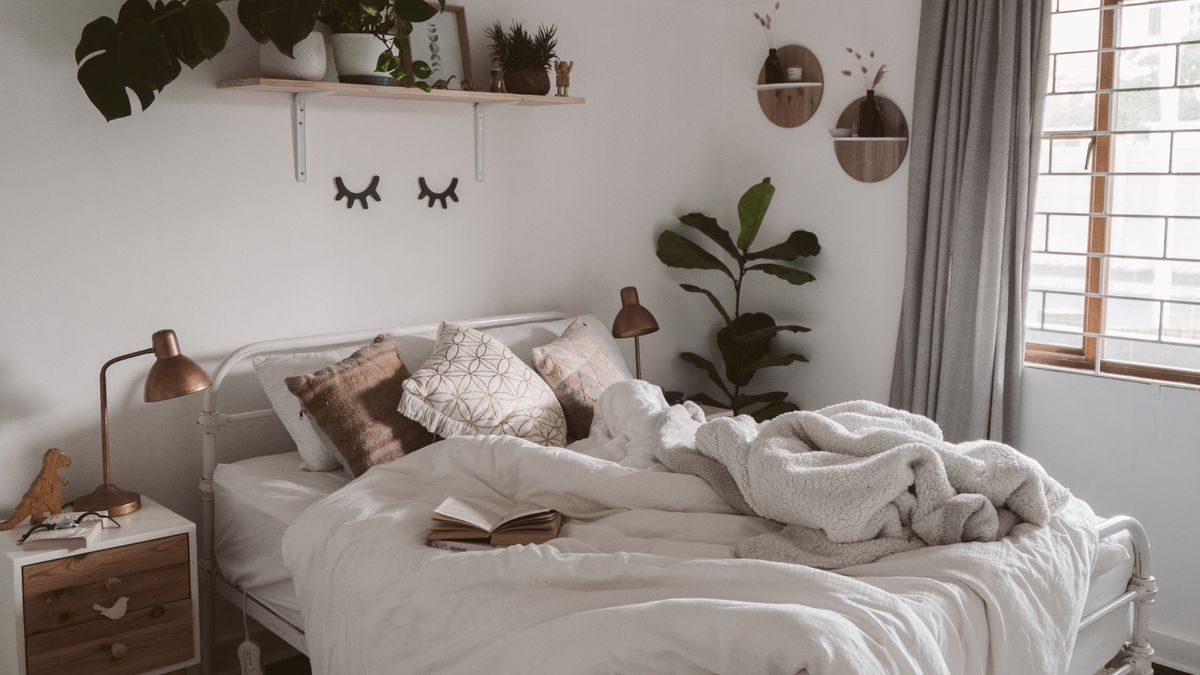
Natural linen is woven from flax and has a slubby, slightly irregular surface, a matte finish and a drape that softens with every wash. Because it absorbs light rather than bouncing it back at you, a linen sofa already brings plenty of quiet visual interest to a room. The temptation when styling is to fill that calm surface with bold colour and busy print. Resist it. Cushions are there to add comfort and a little contrast, not to compete with the fabric underneath them.
Think of the sofa as the foundation layer: quiet, textural, a touch imperfect. Everything you place on top should feel like a considered addition rather than an interruption. That single idea will guide almost every decision below, from the size of the pads to the number of patterns you allow through the door.
More cushion mistakes come down to size than to colour. A deep, low sofa will swallow a 40cm square, while the same cushion looks generous on a slim two-seater. As a rough guide:
Two or three cushions per seating section is usually plenty, and odd numbers tend to look more relaxed than even ones. Always buy the pad one size larger than the cover — a 50cm pad inside a 45cm cover — so the cushion fills its corners properly and holds its shape instead of sagging at the seams. If you are sizing up an existing set, measure the seat depth first and work backwards from there.
A row of identical squares reads as hotel lobby. Combining shapes is what makes a sofa look genuinely lived in, but the mix still needs rules:
If you have two sofas facing each other, vary the arrangement slightly on each. Perfect symmetry can make a natural linen room feel staged rather than settled.
Cushions are furniture, not decoration, so what goes inside matters as much as what shows. Each filling behaves differently:
Whichever you choose, expect to replace pads every three to five years. A tired pad will drag down even the most beautiful cover, and refreshing the insides is far cheaper than replacing the sofa.
This is where a linen sofa comes into its own. Because the base fabric is matte, anything with a little sheen or loft reads as deliberate contrast. Washed linen covers, stonewashed hemp, slubby organic cotton, wool, bouclé, corduroy and even a single velvet cushion all sit happily alongside flax.
Keep to two or three textures per seating area and one dominant one. If your sofa is oatmeal linen, try two cushions in the same oatmeal, one in undyed wool and one in a deeper linen in a related tone. That gives you variation without noise. Be practical, too: heavily textured wool on a sofa that gets daily use will pill, so save the delicate weaves for quieter corners.
Build your palette from what is already in the room — the rug, a piece of artwork, the paint on the walls. Three colours is a comfortable maximum: a neutral, a mid-tone and one accent, all sharing some warmth or coolness so nothing fights. Linen itself supplies the neutral, which means your accent can be braver than you might expect.
For pattern, allow one or two patterned cushions and keep every other cushion plain. Choose prints that share at least one colour with the plains so the group holds together — ticking stripe, a simple block print, a small check or a tonal botanical all work well. Then rotate: swap covers seasonally, store the out-of-use ones flat and clean, and your linen sofa will feel renewed without a single new purchase.

Hi, my name is Anthony kuber. I am artist and fashion designer.
I love to travel and writing blogging.
Your email address will not be published. Required fields are marked *
Software Developer & Writer
Hey, I'm Diva, a developer and writer blending code and creativity. I'm driven by a deep curiosity and a relentless pursuit of excellence. Join me as I craft digital solutions and captivating stories.


