
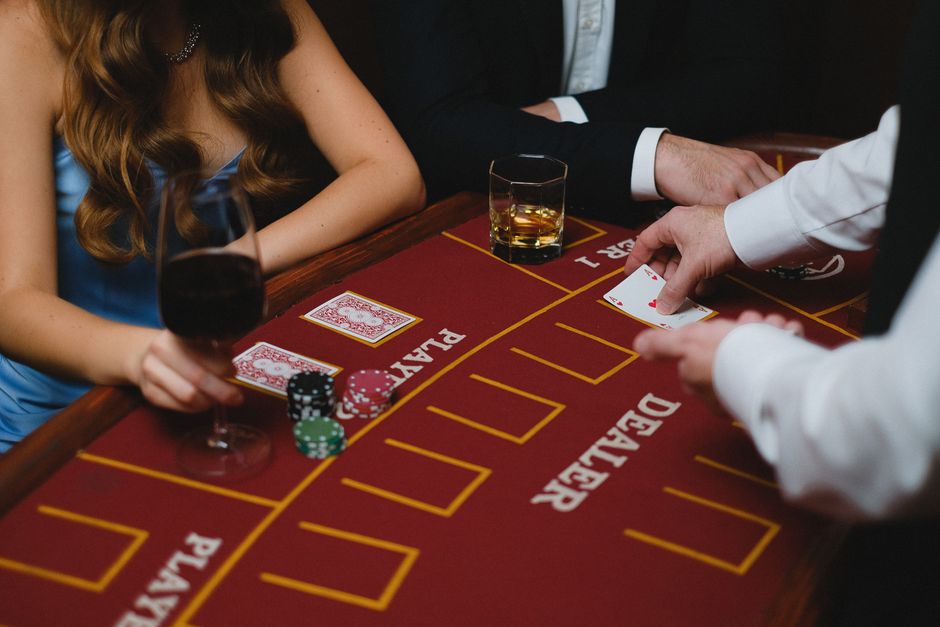
Ask ten people why casinos make money and nine will tell you the same tired line: the house always wins. It's true, but it's also so vague it's useless. The house doesn't win because of luck or magic or rigged wheels. It wins because of math that was locked in centuries before anyone invented a slot machine. Understand that math, and the entire iGaming world stops looking like a casino and starts looking like an ecosystem with very different rules for very different games.
Let's break down what's actually happening under the hood of slots, table games, poker, and sports betting — and where a smart player can realistically find an edge. For more on this, see keonhacaii5.com.co.
Every casino game carries a built-in mathematical advantage for the operator. It's called the house edge, and it's the single most important number in gambling. Here's the thing most casual players miss: the house edge has almost nothing to do with how often you win. It's about how much you lose over time relative to how much you wager.
Compare two classics:
Here's a concrete example. You sit down with €1,000 and play for hours, wagering a total of €10,000. At a 2.7% edge, you'd expect to lose about €270 on average. At 5.26%, you'd expect to lose €526. That difference isn't luck — it's arithmetic. The longer you play and the more you wager, the more that edge grinds you down. This is why the RTP (return to player) percentage matters so much on slots. A 96% RTP slot and a 92% RTP slot look identical on screen, but the second one is quietly twice as expensive.
Slots get a bad reputation among serious gamblers, and honestly, some of it is deserved. But the criticism usually misses the real point.
Table games are slow. You play maybe 60 hands of blackjack an hour. Slots spin fast — 600 to 1,000 times an hour is normal. So even if a slot has a lower house edge than a bad blackjack table, the sheer volume of wagers means your money drains faster. Volatility adds another layer. A low-volatility slot pays small amounts often. A high-volatility slot might go 300 spins without a payout, then hit a 5,000x multiplier. Neither is 'better' — they're built for different bankrolls and temperaments.
One practical tip: always check the RTP before you play. It's usually buried in the game's info panel. Anything below 94% is a hard pass for most players. And if you're chasing bonuses, read the wagering requirements. A 40x wagering requirement on a bonus means you have to bet the bonus amount forty times before withdrawing anything. On a €100 bonus, that's €4,000 in wagers — and at a 4% edge, you're statistically handing back €160 before you see a cent.
Poker is the one game in the building where you're not playing against the house. You're playing against other people, and the house just takes a cut — the rake. That single fact changes everything.
In poker, the house edge doesn't exist in the traditional sense. A skilled player can genuinely win over the long run because the money comes from weaker opponents, not from the casino. The rake is the cost of doing business — typically 5% of each pot, capped at a few dollars.
But here's the catch: the rake means you need to be meaningfully better than your table to profit. At low stakes, the rake can eat 10% or more of your winnings, which is why many pros move up in limits where the cap matters less. If you're serious about poker, three things matter more than anything else:
Sports betting is the fastest-growing segment of iGaming, and it's also the one where bookmakers operate on the tightest margins. A typical book builds a 4% to 8% margin into its odds — that's the overround or vig. On a coin-flip market like a tennis match, you might see odds of 1.91 on both sides. Bet €100 on each and you've wagered €200 to guarantee a €191 return. That missing €9 is the book's profit.
To beat that, you need to be right more than 52.4% of the time on even-money bets. That's genuinely hard. Professional bettors focus on three areas:
All the math in the world doesn't help if you play like a human. And humans are terrible at this. Losses feel twice as painful as equivalent wins feel good — that's loss aversion, and it's why players chase losses. Near misses on a slot (two cherries and a lemon) trigger the same dopamine response as an actual win. Bonuses and free spins are engineered to extend session time because the longer you play, the more the house edge compounds.
The operators know this. Their entire product design is built around it. The pokie machine that celebrates a 'win' smaller than your stake, the sportsbook that shows you a cash-out button mid-match, the pop-up offering a deposit bonus right after you've lost — none of it is accidental.
If you take one thing from all this, make it this: in casino games, you are not playing to win. You are paying for entertainment, and the price is the house edge. Treat it like a night at the cinema — set a budget, enjoy the ride, walk away when it's gone.
In poker and sports betting, the math flips. Skill matters, edges exist, and disciplined players can genuinely profit. But that edge comes from study, bankroll management, and emotional control — not from lucky charms or hot streaks. The players who last are the ones who respect the variance, track their results honestly, and treat every bet as a decision under uncertainty rather than a hope.
The house doesn't always win. But it wins often enough — and consistently enough — that anyone who doesn't understand the numbers is effectively playing a different game than the one they think they're in.

Hi, my name is Anthony kuber. I am artist and fashion designer.
I love to travel and writing blogging.
Your email address will not be published. Required fields are marked *
Software Developer & Writer
Hey, I'm Diva, a developer and writer blending code and creativity. I'm driven by a deep curiosity and a relentless pursuit of excellence. Join me as I craft digital solutions and captivating stories.


