
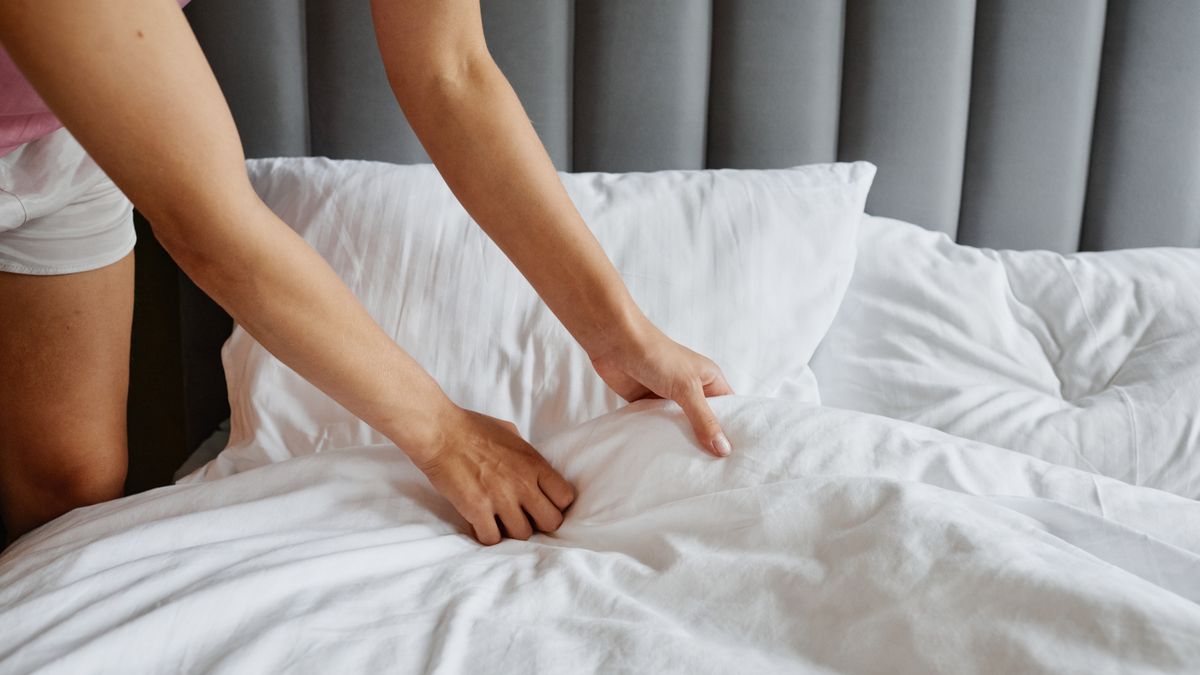
By the end of winter, most linen cupboards have spent months with the door shut, absorbing radiator heat, damp washing and cooking smells. Nothing in there is necessarily dirty, but it can smell flat, feel faintly clammy, and has been folded in exactly the same position since October. Natural linen and cotton are hygroscopic fibres — they take on and release moisture from the air around them. That is part of what makes them so comfortable to sleep under, and also why they respond better to a seasonal airing than to yet another hot wash. A gentle cupboard reset takes an afternoon, costs very little, and will add years to the life of your bedding and towels.
Pull everything out onto a clean sheet or the spare bed. Work shelf by shelf so you can see how much has accumulated, and group things by type as you go. This is the moment to be honest about what you actually use. Most households keep at least one set of bedding that fits a bed they no longer own, and a stack of towels that have gone stiff and grey but never quite get thrown out.
Fresh moving air is the single most effective thing you can do for stored textiles. It lifts stale odours, releases trapped moisture and relaxes the fibres so creases fall out on their own.
On a dry, breezy day, hang linens on an outdoor line for two or three hours. Avoid strong direct sunlight for long periods, as it can yellow white linen and fade coloured pieces. If the weather will not cooperate, drape items over a drying rack near an open window instead, turning them after an hour so both sides get the benefit. Do not air anything in a bathroom or a kitchen where food is cooking — natural fibres will happily absorb whatever is in the air around them, and you will notice it later.
Hold each item up to the light before you fold it. Small problems caught now take minutes to fix; the same problems found in autumn often mean a ruined sheet.
Repair what is worth repairing and cut down what is not. A worn king-size sheet becomes pillowcase linings, cleaning cloths or a protective cover for a sewing machine. Linen is at its strongest when it is used regularly, not when it is hoarded.
If a piece is clean and merely stale, airing is enough. Wash anything that was stored damp, carries marks, or has sat untouched in a spare room for a season. Use a gentle cycle at 30°C to 40°C with roughly half your usual amount of detergent. Skip fabric softener entirely — it coats the fibre, reduces absorbency and can leave a waxy feel that builds up over time. A splash of white vinegar in the rinse compartment helps shift detergent residue and softens water.
Dry on a line where you can, or tumble on a low setting in short bursts. Linen genuinely does become softer with repeated gentle washing; it is the hot cycles and high heat drying that break the fibres down.
Everything must be bone dry before it goes back. A single slightly damp towel can set off mould across a whole shelf within weeks. Fold loosely rather than pressing sharp creases into the same spot for months, since those lines become weak points. Stack so you can see the folded edges, or roll towels to save space.
Make this a twice-yearly habit, in spring and again in early autumn. A cupboard that breathes, holds only what you use and is filled with dry, well-aired linen will keep bedding and towels fresh for far longer — and there is a quiet pleasure in opening a cupboard door and finding everything in order.

Hi, my name is Anthony kuber. I am artist and fashion designer.
I love to travel and writing blogging.
Your email address will not be published. Required fields are marked *
Software Developer & Writer
Hey, I'm Diva, a developer and writer blending code and creativity. I'm driven by a deep curiosity and a relentless pursuit of excellence. Join me as I craft digital solutions and captivating stories.


