
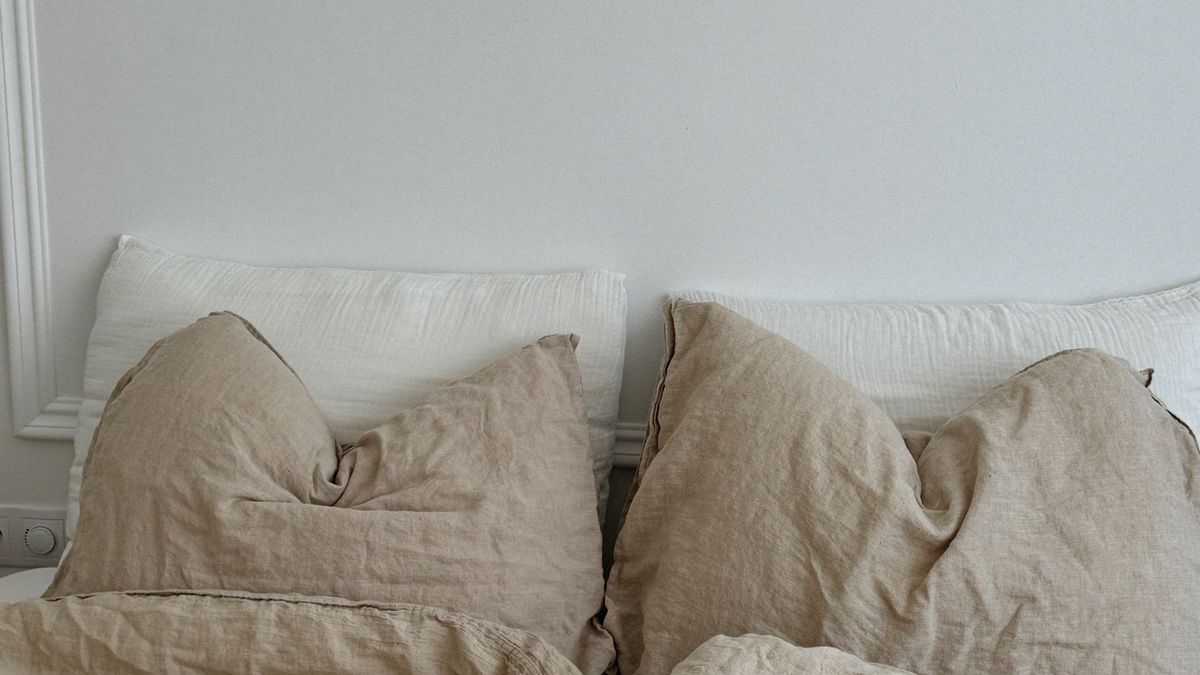
Natural linen bedding has a reputation for getting better with age, and it is largely deserved. Each wash softens the fibres, the weave relaxes, and within a few months you have something that feels noticeably more supple than the day it arrived. But that improvement is not automatic. Linen is strong, yet it is also a fibre that responds to how it is treated, and a few common habits can stall that softening process entirely or shorten the life of your bedding by years.
The good news is that the mistakes are easy to fix, and most of them come down to doing less rather than more. Linen does not need heavy-duty cleaning. It needs space, moderate temperatures, and a little patience.
This is the single most common error, and it is understandable. A king-size duvet cover plus pillowcases feels like a substantial load, so it is tempting to add sheets, towels and a few tea towels to fill the drum. Please resist. Linen needs room to move.
When the drum is packed, water and detergent cannot circulate properly, so soil and residue stay in the fabric rather than being rinsed away. The fibres also rub against each other under constant tension, which causes abrasion and eventually thinning. You may notice small pills, a dulled surface, or wear along the seams long before the fabric itself should be showing its age.
If you have a large machine and only one duvet cover to wash, that is fine. A half-empty drum is not a waste; it is exactly what linen wants.
Bleach and linen are a poor match. Chlorine bleach attacks cellulose fibres directly, weakening them at a structural level, and the damage shows up as yellowing, brittle patches and holes that appear seemingly out of nowhere. Oxygen-based brighteners are gentler but still unnecessary for everyday washing.
Harsh biological detergents bring their own problems. Enzymes designed to break down proteins can nibble at natural fibres over repeated washes, and the optical brighteners and synthetic perfumes in many mainstream products leave a coating that makes linen feel stiff rather than soft. That coating also dulls the subtle, natural lustre that makes linen look the way it does.
What to use instead:
For white linen that has greyed slightly, a gentle oxygen-based soak once or twice a year is acceptable. For coloured linen, skip it altogether — sun drying does more for freshness than any additive.
Heat is linen's other great enemy. Tumble drying on a hot setting shrinks the fibres, sets in wrinkles that are difficult to press out, and causes the surface to feel rough and papery. Repeated exposure to high heat also weakens the yarn, so bedding that should last a decade starts to feel thin after two or three years.
Wherever possible, line dry. Linen dries quickly, and outdoor drying gives it that crisp, airy quality no machine can replicate. If you do use a tumble dryer, choose the lowest heat setting and remove the bedding while it is still slightly damp — around five to ten minutes before it feels completely dry. Smooth it with your hands, fold it, and let it finish drying flat. This small habit prevents both overdrying and the creasing that comes with it.
A note on sunlight: strong direct sun will fade deeper colours over time, so dry coloured linen in the shade or turn it inside out. White and natural linen can take full sun, and benefits from it.
Linen is naturally antibacterial and odour-resistant, so it does not need washing after every night's sleep. A weekly change is plenty for most households, and a duvet cover can often go a fortnight. Over-washing is a quiet form of wear, and every unnecessary cycle takes a little life out of the fabric.
Similarly, ironing is rarely required. Linen is meant to have texture, and a softly crumpled surface is part of its character rather than a fault. If you prefer a smoother finish, iron while the bedding is still damp on a medium setting, or simply smooth it by hand and fold it straight from the line. Never press a hot iron onto dry linen — that is how scorch marks and shiny patches appear.
Store clean, thoroughly dry bedding somewhere airy, folded loosely rather than compressed. Damp linen packed into a cupboard will develop mildew, and that damage is almost impossible to reverse.
None of this requires special effort, just a shift in habit. Wash less often, fill the drum less, keep temperatures moderate, choose a mild detergent, and let the air do the drying. Add a vinegar rinse now and then, and resist the urge to bleach or blast away at stains.
Do those things and your linen will do what it is famous for: soften year on year, hold its strength, and become the most comfortable bedding you own. Treat it with a little restraint and it will quietly outlast almost everything else in your linen cupboard.

Hi, my name is Anthony kuber. I am artist and fashion designer.
I love to travel and writing blogging.
Your email address will not be published. Required fields are marked *
Software Developer & Writer
Hey, I'm Diva, a developer and writer blending code and creativity. I'm driven by a deep curiosity and a relentless pursuit of excellence. Join me as I craft digital solutions and captivating stories.


